
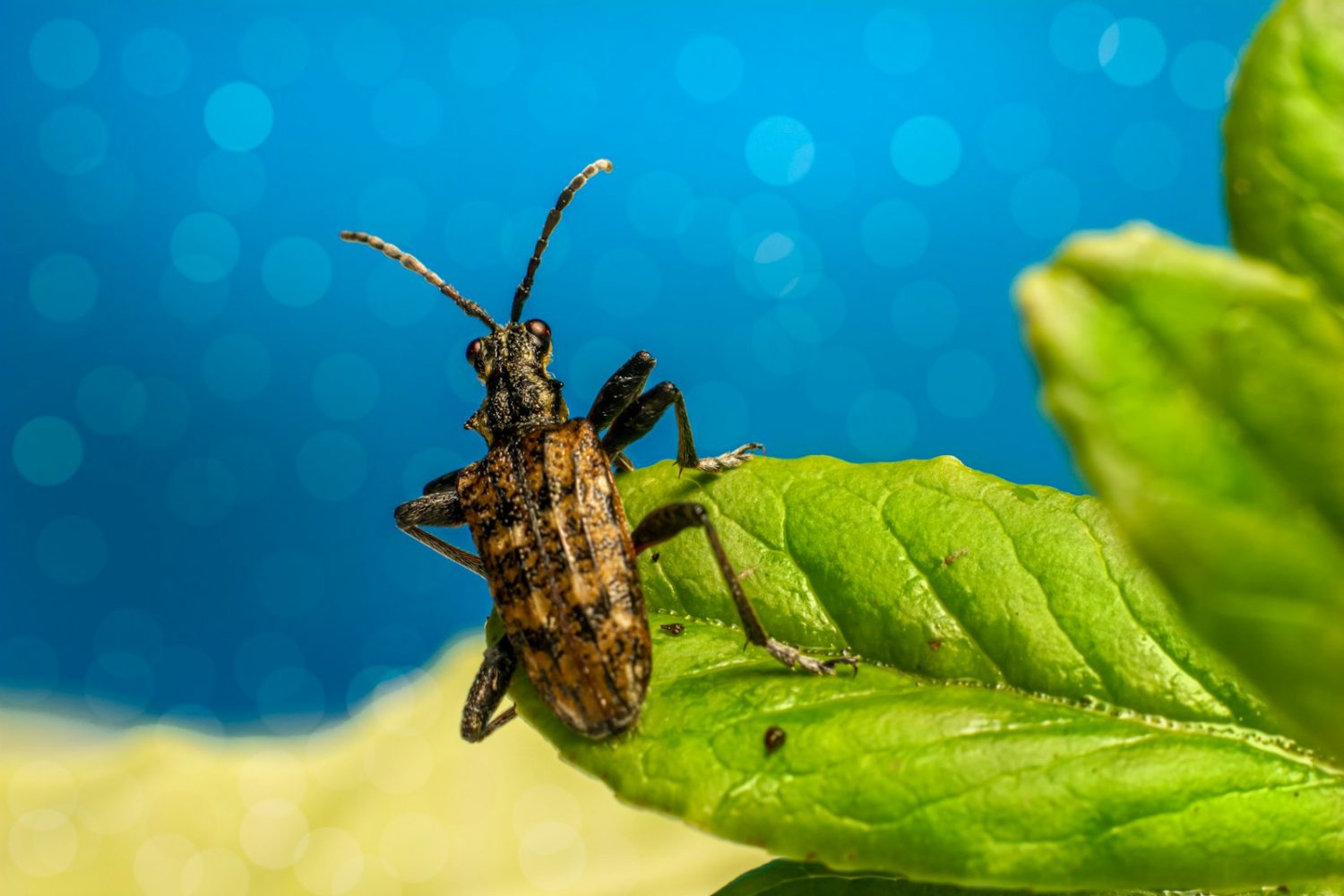
Natural pest control works best when it starts with identification rather than a homemade spray. Many insects cause little lasting damage, while others are beneficial predators or pollinators. Treating every bug can create more problems than it solves.
Use an integrated pest management approach: identify the pest, decide whether control is necessary, start with physical and cultural methods, protect beneficial organisms, and use a correctly labeled pesticide only when needed.
Inspect Plants Regularly
Check new growth and the undersides of leaves for insects, eggs, webbing, sticky honeydew, mines, holes, or discoloration. A hand lens can help distinguish aphids, mites, thrips, scale, and beneficial insects before you act.
University of Minnesota Extension’s yard and garden insect guide provides identification and integrated pest management information for common beneficial insects and pests.
Start With Water and Hand Removal
A strong stream of water can knock aphids and spider mites from sturdy plants. Larger caterpillars, beetles, slugs, and egg masses can often be removed by hand. Prune heavily infested leaves or shoots when the problem is localized.
Use Barriers Before Sprays
Fine insect netting or floating row covers can prevent adult insects from reaching susceptible vegetables to lay eggs. Install barriers before the pest arrives and manage pollination needs for flowering crops.
Protect Beneficial Insects
Lady beetles, lacewings, parasitoid wasps, spiders, and other predators can suppress pest populations. Provide diverse flowers and avoid unnecessary broad-spectrum insecticides. Our pollinator-friendly garden guide explains how to build habitat while reducing pesticide exposure.
Use Commercial Insecticidal Soap Instead of Dish Detergent
Insecticidal soaps are formulated and labeled for use on plants and can control exposed soft-bodied pests such as aphids, mites, and whiteflies. Household dish detergents are not equivalent and can damage the protective surfaces of leaves.
Horticultural Oils and Neem Products
Horticultural oils and some neem-derived products can control certain mites, scales, aphids, whiteflies, and other pests when applied correctly. They generally work through direct contact, smothering, feeding disruption, or growth effects depending on the active ingredient. Always follow the product label and avoid treating flowers when pollinators are active.
Our neem oil guide covers label use, direct-contact effects, pollinator precautions, and plant-sensitivity testing.
Use Diatomaceous Earth Carefully
Diatomaceous earth can work against some crawling pests when it remains dry and loose. Moisture and humidity reduce its effectiveness. Avoid creating airborne dust and keep applications away from flowers where visiting insects could contact it.
Manage Fungus Gnats at the Root Zone
For houseplants, allow the surface of the potting mix to dry appropriately between waterings and use yellow sticky cards to monitor adults. Products containing Bacillus thuringiensis subsp. israelensis can control larvae when labeled for that use. Avoid improvised peroxide drenches that may injure roots or soil organisms.
Avoid Homemade Pesticide Recipes
Garlic, hot pepper, essential oil, detergent, vinegar, and other internet recipes do not come with tested application rates, crop restrictions, harvest intervals, or environmental precautions. “Natural” does not mean harmless. Use researched cultural methods or registered products with labels that tell you how and where they can be used.
Keep Plants Healthy Without Overfeeding
Proper light, drainage, irrigation, spacing, and balanced fertility help plants tolerate pest pressure. Overwatering and excessive nitrogen can create weak growth or conditions favorable to certain pests and diseases. Our organic gardening guide covers soil health, mulch, crop rotation, and integrated pest management.
Treat Only When Needed
A few insects rarely justify spraying an entire garden. Monitor the plant after physical control and give predators time to work. If damage continues to increase, select the lowest-risk effective product labeled for the pest and plant, and follow every direction on that label.