
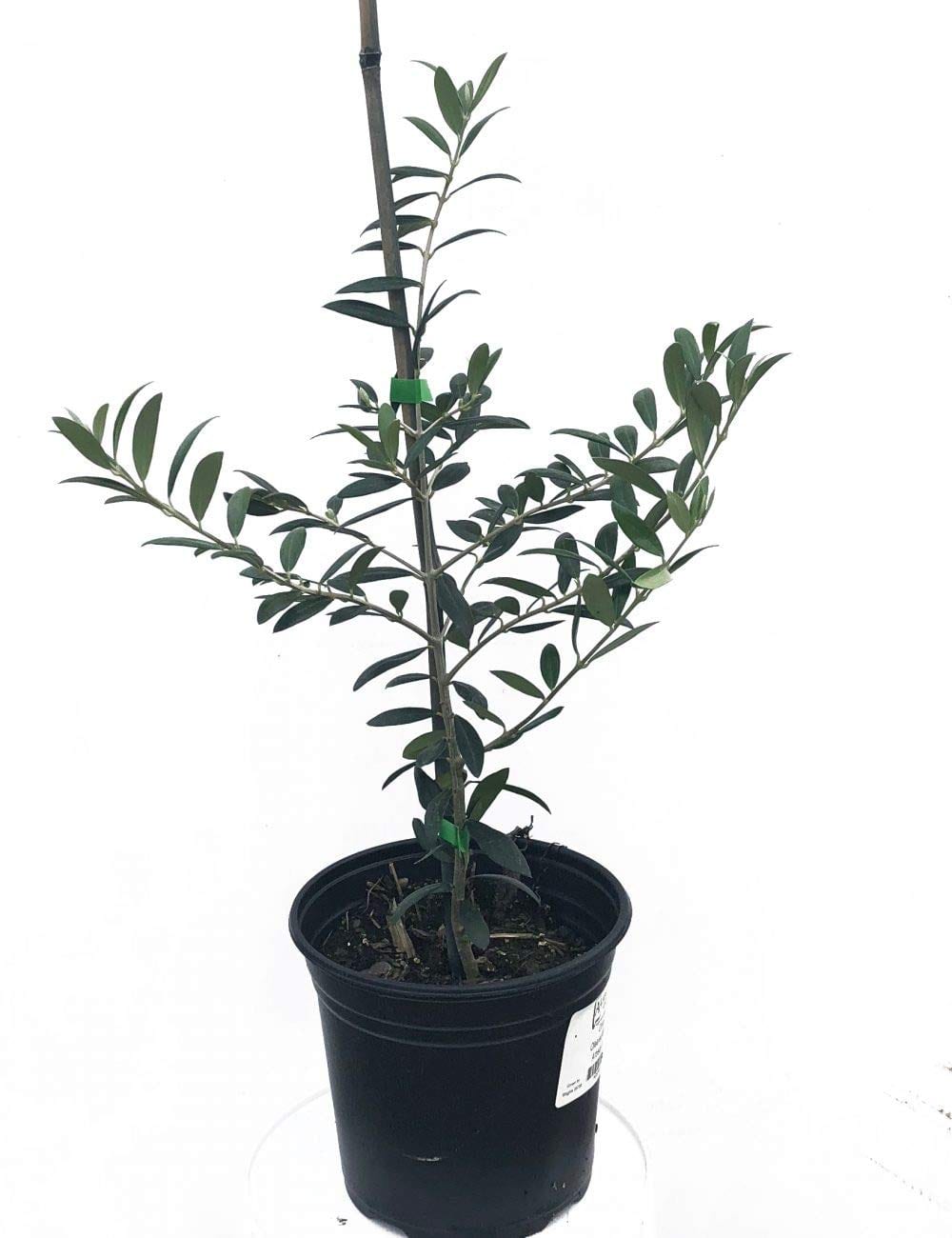
Olive trees (Olea europaea) are evergreen Mediterranean trees valued for silvery foliage, long life, and, on fruiting cultivars, olives for curing or oil. They grow best where summers are sunny and relatively dry and the root zone drains freely.
Cold tolerance varies by cultivar and tree age, so do not rely on one USDA zone number for every olive. In marginal climates, container culture can make winter protection easier.
Choose Full Sun and Excellent Drainage
University of California Agriculture and Natural Resources notes that olives perform best in full sun, tolerate a range of soils, and do not tolerate poorly drained conditions. Its olive production guidance also explains that established trees tolerate drought but irrigation can improve fruit production and size.
Plant at the Correct Depth
Dig the planting hole no deeper than the root ball and wider than the container so roots can spread into surrounding soil. Keep the root flare at or slightly above the surrounding grade and avoid creating a bowl that collects water around the trunk.
Water Young Trees Consistently
Newly planted olives need regular irrigation while their root systems establish. Mature trees are much more drought tolerant, but fruiting trees generally produce better crops when water is available during important growth and fruit-development periods.
Do Not Overfertilize
Olives can grow in relatively lean soils. Excess nitrogen may produce vigorous shoots without improving fruit production. Use soil or tissue information where possible instead of applying a balanced fertilizer automatically every year. Our guide to fertilizer myths and N-P-K explains why measured nutrient needs matter more than a fixed schedule.
Prune for Structure and Light
Remove dead wood, basal suckers, and badly placed branches while preserving enough foliage to support the tree. Fruiting olives benefit from good light penetration and air movement rather than severe annual cutting.
Grow Olives in Containers in Colder Areas
Use a large container with generous drainage holes and a well-drained potting mix. Container trees dry faster than in-ground trees but are also more vulnerable to saturated roots. Move them to a protected bright location when temperatures approach the cultivar’s cold limit.
The same container principles used for edible crops apply here: adequate root volume, drainage, and consistent watering. Our container gardening guide covers those fundamentals in more detail.
Plan the Tree Into the Landscape
Olives can become substantial trees, so allow room for their mature canopy and keep fruiting types away from pavement where dropped fruit may stain. A simple garden plan can help place the tree where sunlight, drainage, and future size all work together.
Match the Olive to Your Climate
Olives are excellent trees in climates that resemble their Mediterranean origins, but they are not equally suited to every region. Choose a cultivar based on local winter lows, summer heat, humidity, disease pressure, and whether your main goal is ornamental foliage, table fruit, or oil.