
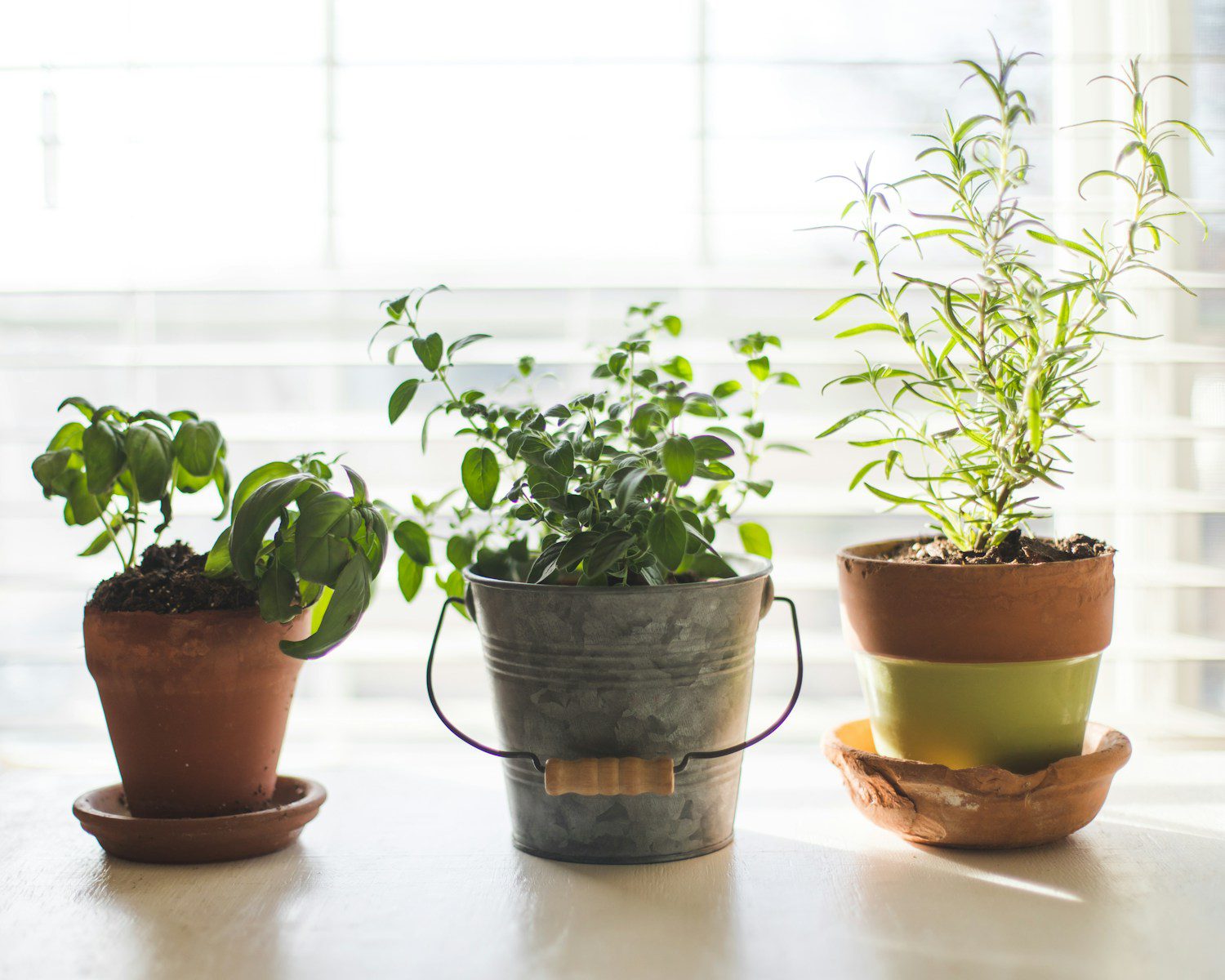
Indoor herbs can provide fresh flavor year-round, but they need more light and careful watering than many beginners expect. Basil, oregano, parsley, chives, thyme, and similar herbs can all grow indoors when containers drain well and the plants receive enough light.
Start with a few herbs you use often rather than filling a windowsill with too many different plants. It is easier to learn their watering and light needs when the group stays simple.
Give Herbs Enough Light
University of Minnesota Extension notes that most culinary herbs perform best in strong light and that indoor herbs may need about 12 hours of artificial light daily. Its herb-growing guide covers light, watering, and common culinary herbs.
A bright south- or west-facing window is often the best natural-light location. If plants stretch, lean heavily, or become pale, add a grow light instead of trying to correct weak growth with fertilizer.
Choose Herbs That Fit Indoor Conditions
Basil, oregano, parsley, chives, thyme, mint, and cilantro are common choices. Basil likes warmth and strong light, while thyme and oregano prefer a potting mix that does not stay constantly wet.
If basil is one of your main herbs, Sweet Italian basil is a useful culinary variety for containers and kitchen harvests.
Use Pots With Drainage
Every container should have drainage holes. Use a quality potting mix rather than dense garden soil, and empty saucers if water collects after irrigation. Constantly wet roots are one of the fastest ways to lose indoor herbs.
Water According to the Herb
Do not water every pot on the same schedule. Check the mix first. Mint and basil generally appreciate more consistent moisture, while oregano and thyme prefer to dry somewhat between waterings.
Harvest to Encourage New Growth
Snip stems regularly instead of removing only individual leaves. For basil, cut just above a pair of leaves so new branches can form. Avoid stripping a small plant heavily all at once.
Expand Into a Larger Herb Garden
Once you know which herbs perform well indoors, you can move some outside seasonally or build a larger culinary planting. Our guide to growing an Italian herb garden offers ideas for combining basil, oregano, parsley, and other kitchen herbs.
If you are working with a balcony or patio instead of a windowsill, our container gardening guide explains how larger pots, vegetables, and herbs can share a small outdoor space.
Keep Indoor Herbs Simple
Good light, drainage, moderate feeding, and careful watering matter more than complicated routines. Start with a few useful herbs, observe how quickly each pot dries, and adjust care to the plant instead of following one schedule for the whole windowsill.