
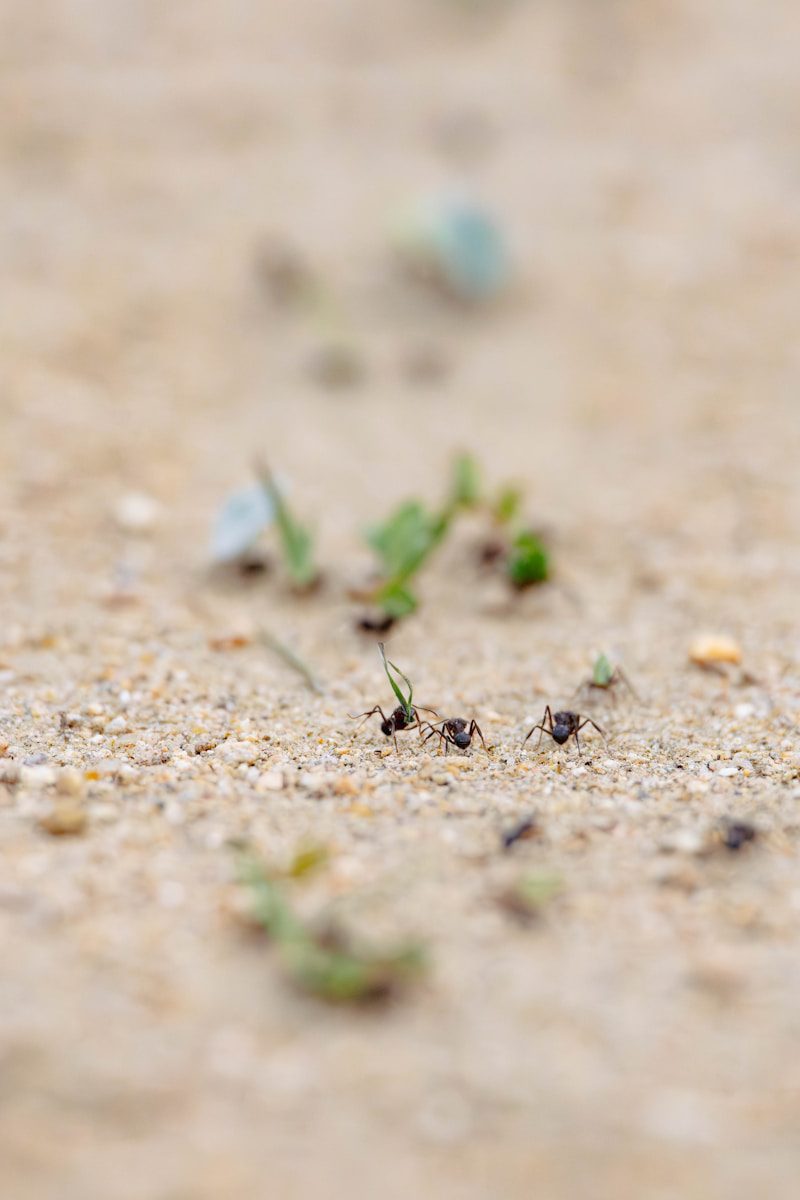
Ants are common in healthy gardens and many species cause little or no plant damage. They can aerate soil, scavenge dead insects, and become food for other wildlife. Control is most useful when a colony is damaging plants, protecting honeydew-producing pests such as aphids, building troublesome mounds, or moving into nearby structures.
Before treating ants, identify what they are doing and where they are nesting. Killing a few workers on a trail rarely affects the colony.
Identify the Ant and Locate the Nest
Different ant species have different food preferences and nesting habits. The University of Minnesota Extension ant guide recommends correct identification and, when control is necessary, locating and treating the nest rather than simply spraying foraging workers.
Check for Aphids and Other Honeydew Producers
Ants are often drawn to the sugary honeydew produced by aphids, scales, mealybugs, and similar insects. If ants are constantly moving up plant stems, inspect new growth and the undersides of leaves. Managing the sap-feeding pest can remove an important food source without treating the ants directly.
When treating insect problems around flowers, protect beneficial insects as well. Our pollinator-friendly garden guide explains why targeted pest management is preferable to unnecessary broad-spectrum spraying.
Reduce Food and Shelter
Pick ripe produce, clean up fallen fruit, store pet food securely, and reduce debris where troublesome colonies are nesting. Thick mulch, lumber, stones, and other objects can provide sheltered nesting sites for some species.
Do Not Rely on Common Home Remedies
Cinnamon, coffee grounds, orange peels, essential oils, and similar remedies do not reliably eliminate ant colonies. Vinegar may temporarily disrupt a trail, but it does not remove the nest. Avoid pouring boiling water or unregistered homemade pesticide mixtures into planted beds where roots, people, pets, or beneficial organisms could be harmed.
Use Baits or Labeled Nest Treatments When Needed
If a colony truly needs control, use a product labeled for the ant species and the outdoor site. Slow-acting baits can allow workers to carry the active ingredient back into the colony. Direct nest treatments can also work when the nest location is known. Always follow the pesticide label.
Manage Container Gardens Carefully
Ants sometimes nest in dry or sheltered containers. Regular watering appropriate for the crop and removing nearby food sources can make pots less attractive. Our guide to growing vegetables in containers covers practical watering and drainage for patio-grown crops.
Use the Same Integrated Approach for Other Insects
Correct identification, habitat changes, monitoring, and targeted treatment are useful across many garden pest problems. Our guide to controlling earwigs in the garden follows the same approach.
Tolerate Ants When They Are Not Causing Harm
An ant trail by itself is not always a reason to treat. If plants are healthy and the colony is not creating a safety or structural problem, leaving it alone may be the simplest choice. Focus control on confirmed damage and troublesome nests rather than trying to eliminate every ant from the garden.