
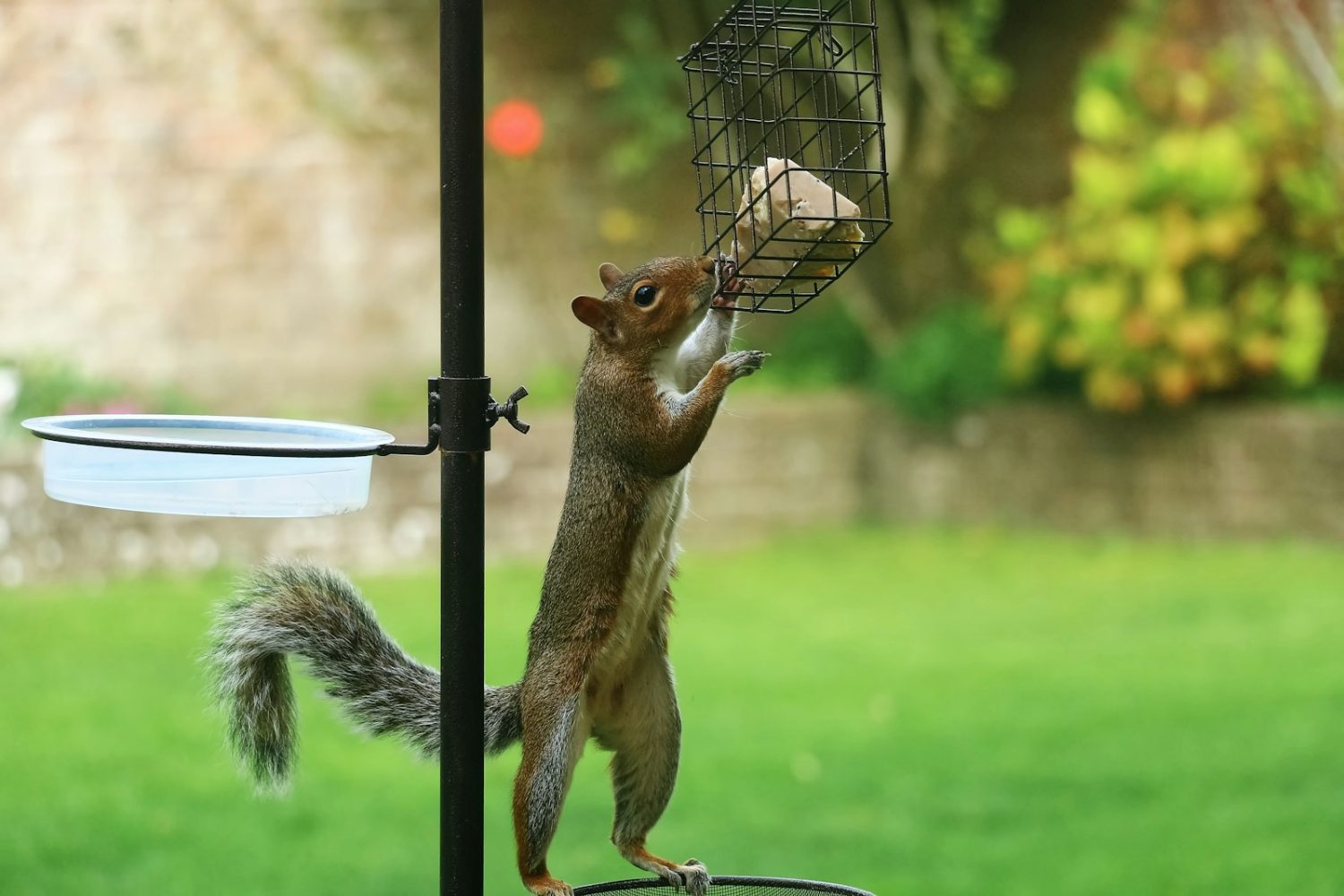
Squirrels can dig up bulbs and seeds, damage ripening vegetables, chew fruit, and raid containers. The most dependable way to reduce damage is to protect valuable plants with physical barriers and remove easy food sources that keep drawing squirrels back.
Repellents and scare devices may help temporarily, but squirrels learn quickly. Use them as support tools rather than the main defense.
Protect Crops With Mesh and Netting
The University of Minnesota Extension recommends physical barriers such as netting for squirrels and other climbing animals; its garden wildlife exclusion guidance explains why barriers are usually the most effective starting point.
Cover raised beds, berry plants, and other high-value crops with securely fastened mesh. Make sure squirrels cannot simply lift an edge or enter from underneath.
Protect Seeds and Bulbs
Fine hardware cloth placed over newly planted areas can prevent digging while allowing shoots to emerge. Bulb cages can also help where squirrels repeatedly dig up newly planted bulbs.
Reduce Easy Food Sources
Pick ripe vegetables promptly and remove fallen fruit, nuts, and spilled birdseed. Squirrel pressure often increases where bird feeders provide a steady food supply near the garden.
Use Containers for Valuable Plants
Containers can be placed on porches, patios, or protected areas that are easier to screen. Compact crops such as Tiny Tim tomato work especially well where you want edible plants in a more controlled location.
Plan for Other Small Wildlife
Squirrels often share the garden with chipmunks, so the same fine-mesh barriers can solve more than one problem. See our guide to keeping chipmunks out of the garden for additional seed and bulb protection ideas.
If larger digging animals are also present, our guide to keeping groundhogs out of the garden explains how to reinforce lower fence sections.
Focus on Exclusion First
Secure mesh, clean garden habits, and protected containers are usually more reliable than repeatedly changing scents or scare devices. Protect the plants that matter most and make the garden less rewarding to visit.