
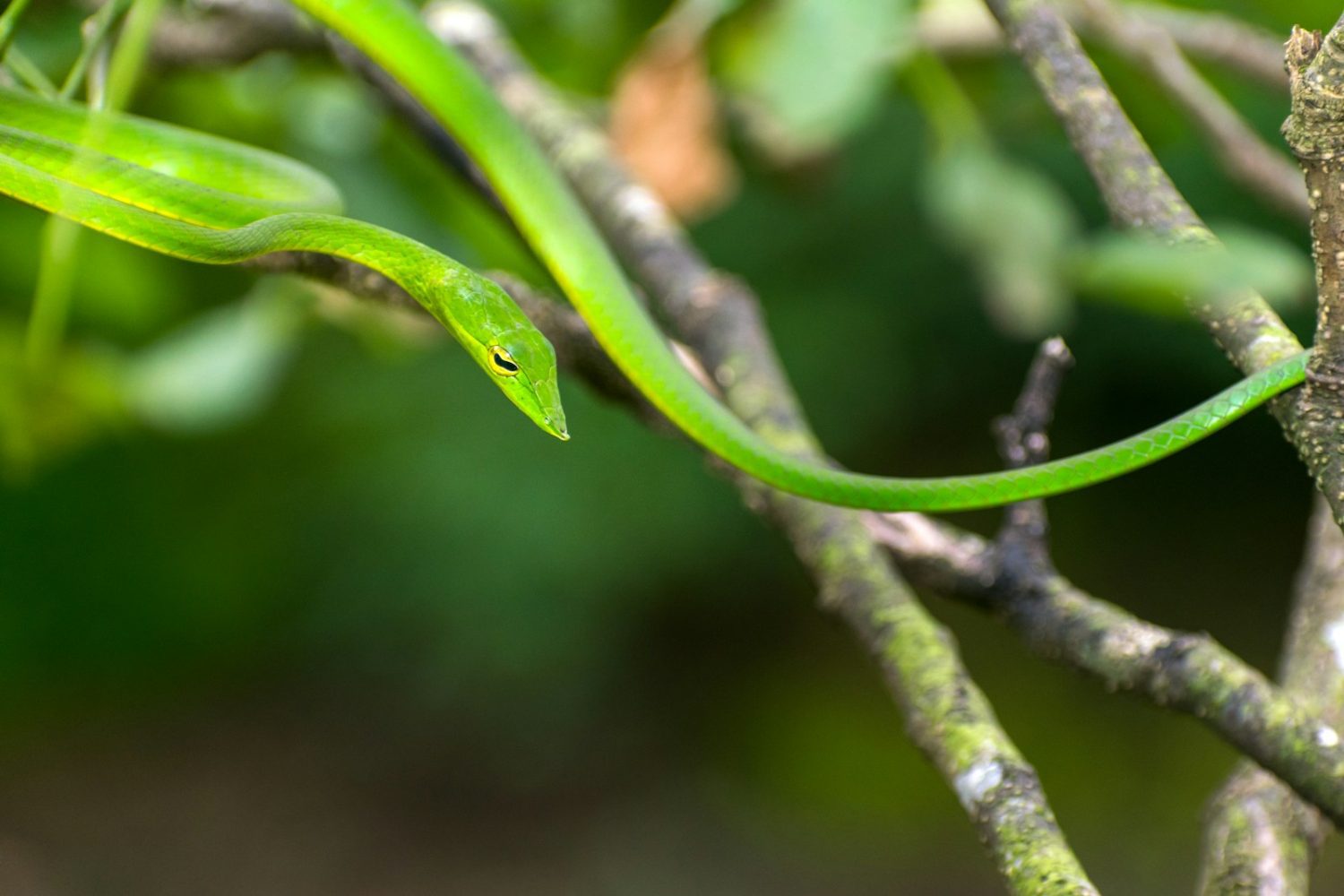
Most snakes seen in gardens are not dangerous to people, but “garden snake” is not a precise species name. In many parts of North America, people use the term for garter snakes and other small nonvenomous snakes that happen to live around yards and flower beds.
The important question is whether you can identify the snake safely. Never handle an unknown snake, and give any snake room to leave on its own.
Garden Snakes Are Usually Garter Snakes
In Alabama, the eastern garter snake is commonly called a garden snake or gardener snake. The Alabama Department of Conservation and Natural Resources lists it among the state’s nonvenomous snakes; its eastern garter snake profile describes the species and its common occurrence in gardens.
Venomous Is Different From Poisonous
A poisonous animal causes harm when it is eaten or touched. A venomous animal delivers toxins through a bite, sting, or similar mechanism. When discussing snake safety, “venomous” is the more accurate term.
Most Garden Snakes Help Control Small Pests
Garter snakes and other small nonvenomous species may eat slugs, insects, amphibians, earthworms, and small rodents. Their presence is part of the normal food web around a garden rather than a sign that something is wrong.
A landscape with diverse habitat can support many kinds of wildlife. Our guide to growing native plants explains how plant choice can support a broader backyard ecosystem.
Do Not Rely on Snake Repellents
Commercial snake repellents have not been shown to work consistently. Instead, reduce hiding places near buildings, control rodents, keep clutter away from walkways, and use caution when reaching under boards, rocks, or dense vegetation.
Learn the Venomous Species in Your Area
Most Alabama snakes are nonvenomous, but the state does have venomous species. Learn the local species rather than assuming every small striped snake is harmless or every large snake is dangerous.
Give Wildlife Space
If you are dealing with several kinds of garden visitors, physical barriers may be more useful around valuable crops than trying to remove every animal. Our guides on keeping deer out of the garden and keeping groundhogs out show how exclusion can protect plants while allowing wildlife to remain elsewhere in the landscape.
The Safer Answer
Many snakes found in gardens are harmless species such as garter snakes, but you should never identify an unfamiliar snake solely by where you found it. Observe from a safe distance, learn the species common in your region, and leave unknown snakes alone.