
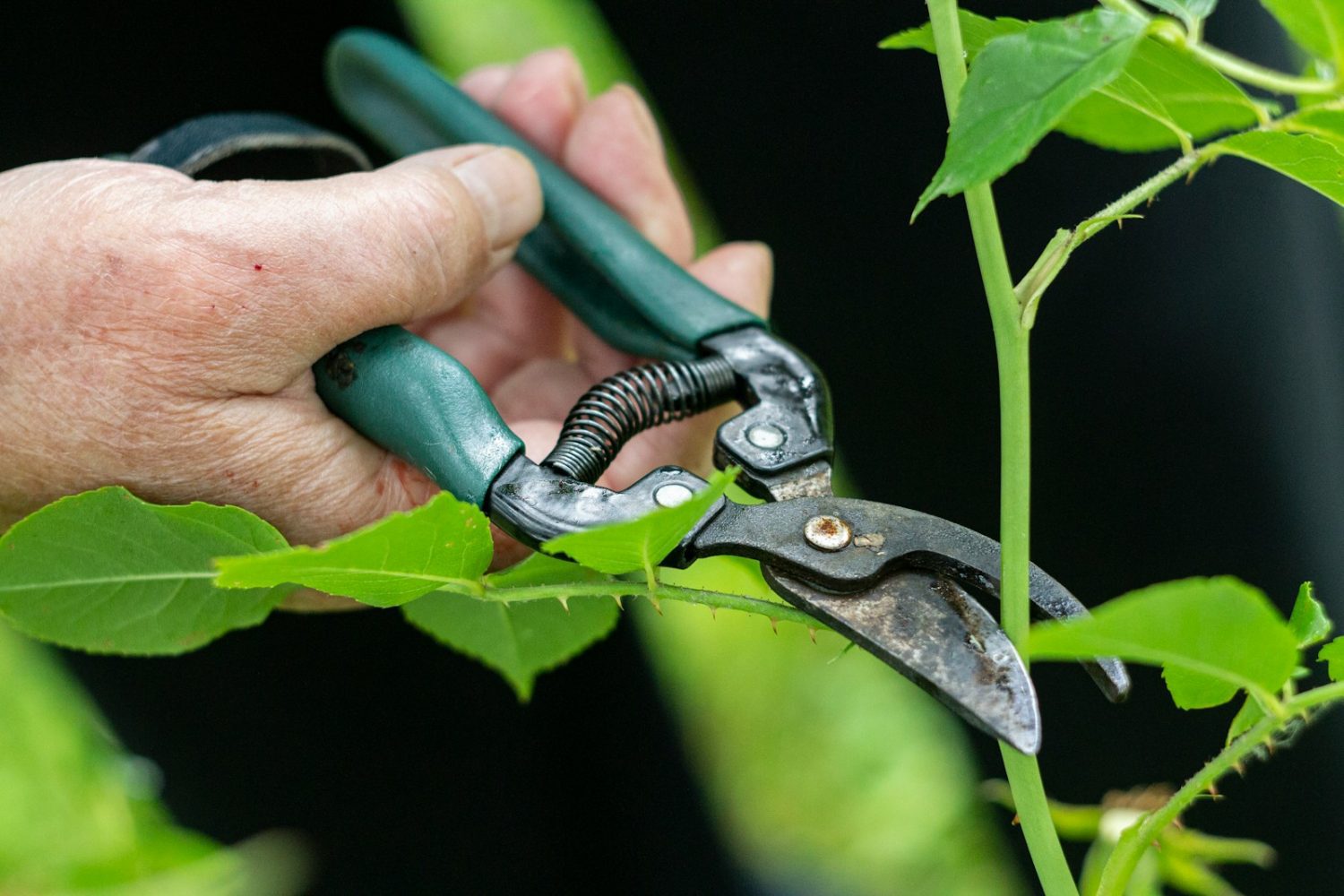
Sharp garden shears make cleaner cuts and require less force than dull blades. Regular cleaning, sharpening, and oiling also help the tool last longer and reduce the chance of crushing stems during pruning.
You can sharpen most hand shears with a mill file, whetstone, or diamond sharpener. The important part is to follow the blade’s original bevel instead of grinding a new angle into it.
Clean the Blades First
Remove soil, dried sap, and rust before sharpening. Dry the tool thoroughly so it is easier to see the cutting edge and so moisture is not trapped around the pivot.
Secure the Tool
Clamp the shears or blade so they cannot shift while you work. Keep the cutting edge pointed away from your body. University of Georgia Extension recommends securing tools before filing and maintaining the blade’s original angle; its garden tool care guide gives practical sharpening steps.
Follow the Existing Bevel
Place the file or stone against the beveled edge and push it in smooth strokes away from your body. Work in one direction rather than sawing back and forth. A few controlled passes are usually better than aggressive grinding.
Sharpen the Correct Side
Bypass and scissor-action tools have specific beveled surfaces. Sharpen only the surfaces designed to be sharpened so the flat mating faces continue to slide cleanly against each other. Lightly remove any burr from the back side after sharpening.
Oil the Pivot and Blades
After sharpening, wipe away metal filings and apply a small amount of oil to the pivot and clean blade surfaces. Open and close the shears several times to distribute the lubricant.
Use the Right Tool for the Cut
Do not force hedge shears or hand pruners through branches larger than the tool is designed to handle. Use loppers or a pruning saw for larger wood. Matching the tool to the cut helps preserve the sharpened edge.
Clean shears are especially useful when removing spent flower stalks or damaged foliage from plants such as Iris germanica, where clean cuts make routine maintenance easier.
Keep Tools Ready for Seasonal Maintenance
Regular tool care makes jobs like dividing and cutting back perennial beds faster and cleaner. It also helps when maintaining the dense mixed plantings described in our modern cottage garden guide.
A Quick Touch-Up Is Usually Enough
Do not wait until blades are badly damaged. Cleaning after use and touching up the edge when cutting begins to feel rough usually prevents the need for heavy reshaping later.