
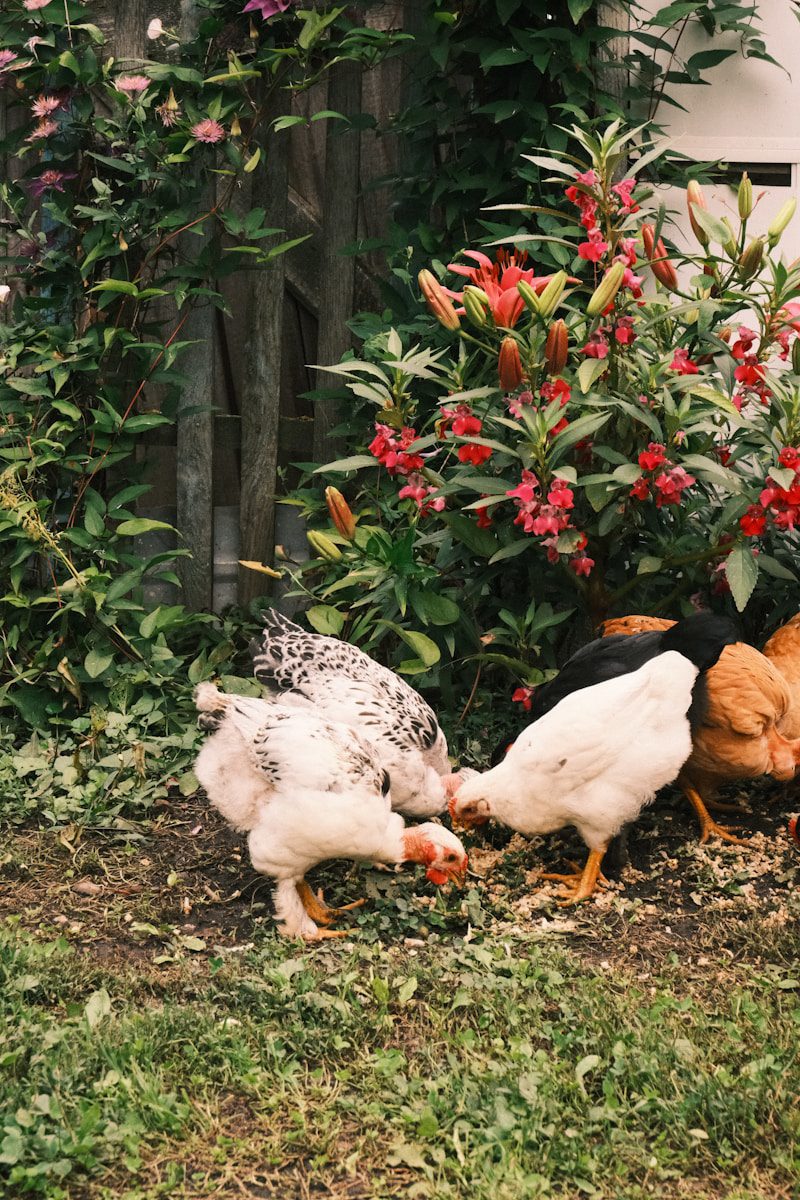
Chickens naturally scratch, peck, dust-bathe, and investigate loose soil. Those habits are useful in some parts of a yard but can uproot seedlings, scatter mulch, and damage vegetables when a flock enters an active garden.
The most dependable solution is to create clear physical boundaries and give the birds another place to forage. Training and deterrents can help, but barriers do most of the long-term work.
Fence the Garden or the Chicken Area
University of Georgia Extension recommends fencing backyard flocks for their safety and notes that fencing should extend to the ground with mesh small enough to contain the birds. Its backyard flock management guide is a useful reference when planning a secure run.
For the garden itself, wire fencing, mesh panels, and temporary netting can protect planting areas. Some chickens can fly over low barriers, so height may need to be adjusted for your breed and flock behavior.
Protect Young Plants First
Seedlings and newly planted beds are especially vulnerable. Use row-cover hoops, wire cages, or temporary panels until plants are large enough to withstand occasional contact.
Use Raised Beds as Part of the Barrier
Raised beds can make it easier to add a lightweight fence or removable cover around the growing area. If you are building new beds, our guide to building a cheap raised garden bed can help you create a simple structure that is easy to protect.
Give Chickens Their Own Digging Area
A dry dust-bathing area, loose soil, leaf litter, or a supervised compost area gives chickens an appropriate place to scratch and forage. Keeping food, shade, and interesting ground cover inside their designated area can reduce the attraction of the garden.
Use Containers for Vulnerable Crops
Containers can be placed on patios, porches, or other areas that are easier to separate from roaming birds. Compact crops such as Tiny Tim tomato are especially practical when you want edible plants in a protected container area.
For more crop ideas suited to movable pots and small spaces, see our guide to vegetables for container gardening.
Use Routine and Supervision
If chickens are allowed to free-range, supervised access makes it easier to redirect them before they settle into a planting bed. Feed and treats should be offered away from the garden so the flock learns that the best rewards are found elsewhere.
Let Chickens Work After the Crop Is Finished
Chickens can be useful in empty garden areas after harvest, where scratching can disturb weeds and expose insects. Keep them out while valuable crops are growing, then use controlled access when plant damage is no longer a concern.