
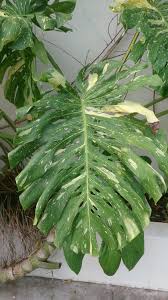
Monstera deliciosa is a tropical climbing houseplant known for large glossy leaves that develop splits and holes as the plant matures. Green and variegated forms share the same basic needs: bright filtered light, good drainage, careful watering, and sturdy support.
Variegated plants usually grow more slowly because the pale leaf tissue contains less chlorophyll, so they need enough light to support the green portions without being exposed to harsh direct sun.
Give Monstera Bright, Indirect Light
North Carolina Extension recommends moderate brightness without harsh direct sun and notes that variegated cultivars generally need more light than darker green forms. Its Monstera deliciosa plant profile also covers temperature, watering, support, propagation, and toxicity.
Water Thoroughly, Then Let the Mix Dry Somewhat
Water until excess drains from the pot, then wait until the upper portion of the mix has dried before watering again. Constantly wet soil can damage roots, while severe drought can cause wilt and brown edges.
Use a Chunky, Well-Drained Potting Mix
A mix containing quality potting soil, bark, and an aeration material such as perlite can provide both moisture retention and air around the roots. Always use a pot with drainage holes.
Support the Climbing Growth
Monsteras naturally climb and often produce larger leaves when given vertical support. A coir totem pole gives stems and aerial roots a structure to grow against.
Feed During Active Growth
Use a complete houseplant fertilizer according to the product label during periods of active growth. Avoid assuming that a fixed 20-20-20 formula or half-strength schedule is ideal for every plant, potting mix, and water source.
Understand Variegation
White sections do not photosynthesize as effectively as green tissue, so heavily variegated plants may grow more slowly. If a chimeral plant begins producing only green growth, pruning decisions should be based on where variegation remains in the stem rather than simply increasing fertilizer or light.
Watch for Common Houseplant Pests
Spider mites, scale, and mealybugs can occasionally appear. Inspect new growth and leaf undersides regularly. Our guide to natural pest control for gardens and houseplants explains how to identify problems and use integrated pest management rather than spraying automatically.
Keep Monstera Away From Pets That Chew Plants
Monstera contains calcium oxalate crystals that can irritate the mouth and digestive tract if chewed. Place it where pets and young children are unlikely to bite leaves or stems.
Pair With Other Tropical Foliage Plants
If you enjoy large-leaved tropical houseplants, Philodendron ‘Splendid’ offers a different climbing foliage form with similar indoor display appeal.
Keep Monstera Care Consistent
Bright filtered light, a well-aerated root zone, sensible watering, and climbing support matter more than complicated routines. Give the plant room to mature and adjust care according to actual growth rather than the calendar alone.